Your cart is currently empty!
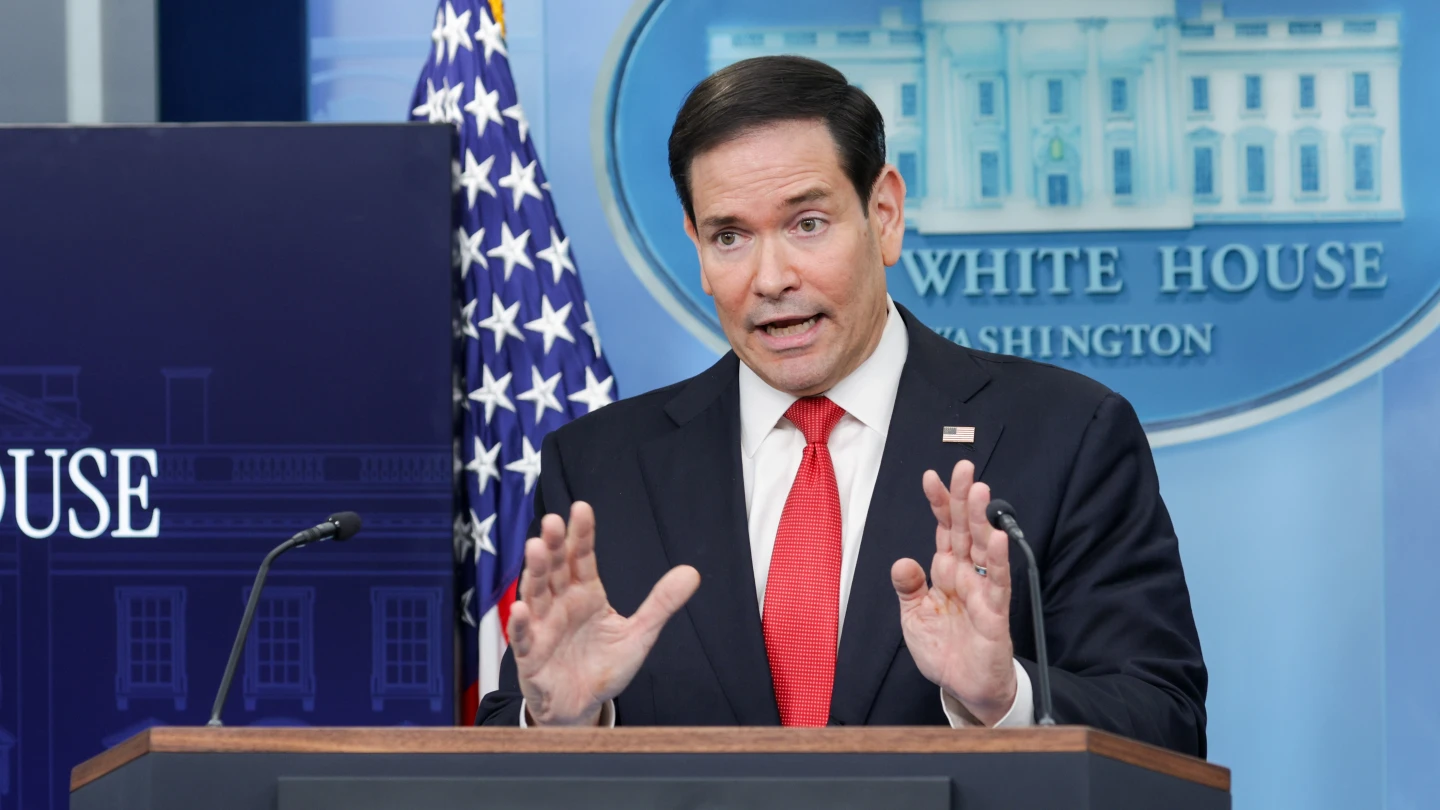
‘No problem’ between the Israeli and Lebanese governments, Rubio says
The tensions between Israel and Lebanon are driven by Iranian-backed Hezbollah, U.S. Secretary of State Marco Rubio said on Tuesday.
“The problem between Israel and Lebanon is not Israel or Lebanon—it’s Hezbollah,” the top American diplomat said.
The secretary spoke to reporters at the White House about the Trump administration’s ongoing attempts to broker a peace agreement between Beirut and Jerusalem.
“There’s no problem between the Lebanese government and the Israeli government. Israel doesn’t claim any land in Lebanon belongs to them. And by and large, I think a peace deal between Lebanon and Israel is eminently achievable and should be,” Rubio said.
Washington is “very committed to this process,” he continued. “We’re going to do everything we can to make sure that both sides continue to talk so that progress can be made on some sort of permanent ceasefire that isn’t constantly spoiled by Hezbollah and by Hezbollah violence.”
Rubio noted that the Islamic Republic of Iran is supporting “all the bad actors” in the Middle East, including Hezbollah, out of a “desire to destabilize the region.”
A normalization deal is possible if the Lebanese Armed Forces have the willingness and the capability to “challenge Hezbollah and disarm them,” he said, adding: “The Lebanese people are also victims of Hezbollah.”
Hezbollah began firing rockets and drones at Israel on March 2, following the targeted killing of Iranian Supreme Leader Ali Khamenei in the opening strikes of Operation Roaring Lion on Feb. 28.
In response to the Iranian-backed terrorist organization’s violation of the U.S.-brokered Nov. 27, 2024, truce agreement, Jerusalem launched an aerial campaign against Hezbollah and ordered the Israel Defense Forces to advance and take control of additional areas in Southern Lebanon to halt cross-border attacks.
Jerusalem and Beirut on April 16 agreed to a 10-day ceasefire following mediation by U.S. President Donald Trump. The two countries on April 23 agreed to extend the truce for three more weeks following direct talks in Washington, D.C.
The U.S. administration has pushed for a direct meeting between Lebanese President Joseph Aoun and Israeli Prime Minister Benjamin Netanyahu, with Trump suggesting it could take place at the White House within weeks. However, Aoun said on Monday that he will not meet Netanyahu until a security agreement is reached and Israeli strikes on Hezbollah terror assets in Lebanon cease.
Netanyahu last week accused Hezbollah of “essentially disintegrating” the temporary ceasefire through its terrorist attacks.
“Therefore, as far as we are concerned, what obligates us is the security of Israel, the security of our soldiers, and the security of our communities,” the premier said. “We are acting vigorously according to the rules we agreed upon with the United States, and incidentally, with Lebanon as well.”
Hezbollah launched suicide drones and rockets throughout Tuesday targeting IDF troops operating south of the ceasefire line in Lebanon, the military said. No injuries were reported.
The attacks continued on Wednesday morning, with Hezbollah launching several rockets, explosive drones and mortar shells that landed near Israeli soldiers. No injuries were reported.
Since the start of the operation, IDF troops have dismantled five underground tunnels and thousands of terrorist infrastructure sites in the area, according to the military. The IDF said forces also killed more than 250 terrorists in close-quarters combat and airstrikes, while uncovering hundreds of weapons, including drones, explosives, anti-tank missiles and RPGs.
Leave a Reply
You must be logged in to post a comment.